Internship: Process-Induced Deformation Analysis
- Op locatie
- Marknesse, Flevoland, Nederland
- Stages
Functieomschrijving
Background
Aviation is a highly energy-intensive sector. The International Civil Aviation Organization (ICAO) forecasted that by 2050 international aviation emissions could triple compared to 2015. To address this trend, various technical and operational measures - such as the use of sustainable aviation fuels, improvements in airframes and engines, - are essential to mitigate the growth of emissions, ultimately reducing them in the coming decade and contributing to the EU’s overall climate neutrality target.
One way to address this, is by the use of propeller-based propulsion systems, with batteries being used for energy storage and electric motors for supplying power, the electrification of aircraft enables the possibility for energy to be recovered during phases of flight where no power input is required. Novel propeller design strategies are being explored to meet the growing demands for decreases in energy consumption and noise emissions of propeller-driven aircraft.
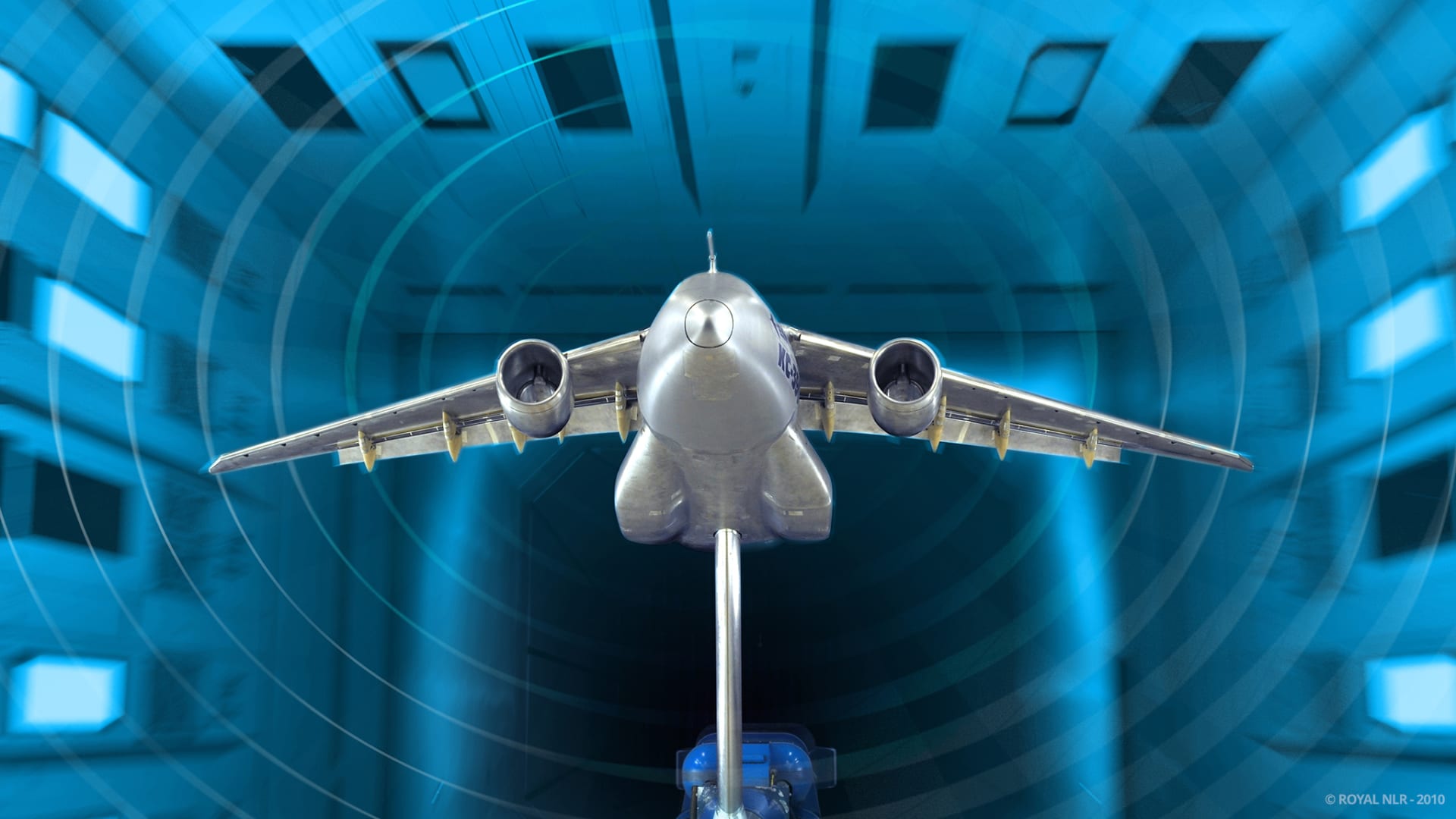
In order to accelerate the time to market for novel propeller designs, Royal NLR is building propeller engine Aerodynamic and Aeroacoustic windtunnel models. For these windtunnel models the geometric tolerances are becoming smaller, especially with regards to the twist of the blade. In order for the windtunnel models to remain accurate, an improvement in the prediction of the spring-back during manufacturing of the propeller blade is necessary to assure geometrical fit with the blades design intended hot shape.
Assignment
In order to analyse the process induced deformations (PID) of the propeller composites blades after manufacturing Finite Element Analysis will be performed. An Abaqus plug-in will be used to analyse the deformations caused by the manufacturing. By the use of Finite Element Calculations the following will be performed:
Investigation of the geometric parameters that drive the manufacturing tolerance
Investigation on composite laminate design parameters that drive the manufacturing tolerance
Validate the models via physical tests
Model the twist deformation of a specific blade geometry after the blade comes out of the mould
Apply a pre-twist on the design based on the FE model results, such that there is an improvement in the manufactured tolerance in terms of twist
Result
The foreseen result is a comparison between the current applied PID prediction methods versus the simulation under development
Duration
This fulltime (graduate) internship starts preferably as soon as possible and will have a duration of 6-9 months.
Profile
Master student Aerospace or Mechanical Field Engineering
Affinity with composite materials and composite manufacturing
Experience with FEM software such as Abaqus
Familiarize with the topic of process-induced deformation
Assertive and self-motivated, able to be part of the project team and also proceed individually
English fluent, Dutch is a differential.
What we offer
A challenging graduation project/internship in a high-tech result orientated work environment
Weekly supervision and availability of the technical staff for support
An internship allowance
Working in an actual R&D project as part of the team
Internship results to be used in the current and future projects
A diverse and multicultural work environment
About NLR
Royal NLR has been the ambitious research organisation with the will to keep innovating for over 100 years. With that drive, we make the world of transportation safer, more sustainable, more efficient and more effective. We are on the threshold of breakthrough innovations. Plans and ideas start to move when these are fed with the right energy. Over 900 driven professionals work on research and innovation. From aircraft engineers to psychologists and from mathematicians to application experts.
Our colleagues are happy to tell you what it’s like to work at NLR.
This assignment will be managed by the Structures Technology department within the Aerospace Vehicles (AV) division.
The Structures Technology department (+30 employees) contributes to the development of lightweight civil and military aircraft components and the sustainability of aviation through the use of high-tech materials and innovative manufacturing processes.
We evaluate new materials, develop new construction concepts and manufacturing techniques with a focus on Robot-Based-Composites Manufacturing and Metal Additive Manufacturing. In addition to physical experiments, we also increasingly perform simulations of manufacturing processes and develop digital representations of manufacturing techniques (digital twins). With these activities, we strengthen the competitiveness of companies that produce aerospace components and support defense tasks. We conduct much of our research together with universities and companies. Our project teams are multidisciplinary and work in (inter)national partnerships.
Interested:
You can apply on this vacancy, for more information you can reach to Fabricio Brizon: Fabricio.Brizon@nlr.nl
of
Helemaal klaar!
Je sollicitatie is succesvol ingediend!